
Artificial Intelligence (AI) has rapidly transitioned from an academic curiosity to a transformative force impacting almost every industry. While the term is often used interchangeably with automation, AI is much more nuanced. It’s about creating machines that can reason, learn, adapt, and even understand human emotion.
1. What is AI, Really?
AI encompasses a range of technologies—from machine learning (ML) and deep learning to natural language processing (NLP) and computer vision. While ML algorithms learn patterns from data, deep learning uses neural networks to mimic the way humans learn. NLP allows machines to interpret, understand, and generate human language.
2. AI in Everyday Life
-
Healthcare: AI aids in early disease detection, drug discovery, and robotic surgeries.
-
Finance: Predictive analytics detect fraud and power robo-advisors.
-
Retail: Personalized recommendations and demand forecasting.
-
Transportation: Self-driving cars, route optimization, and predictive maintenance.
-
Security: Facial recognition, threat detection, and biometric access control.
3. Generative AI: The New Frontier
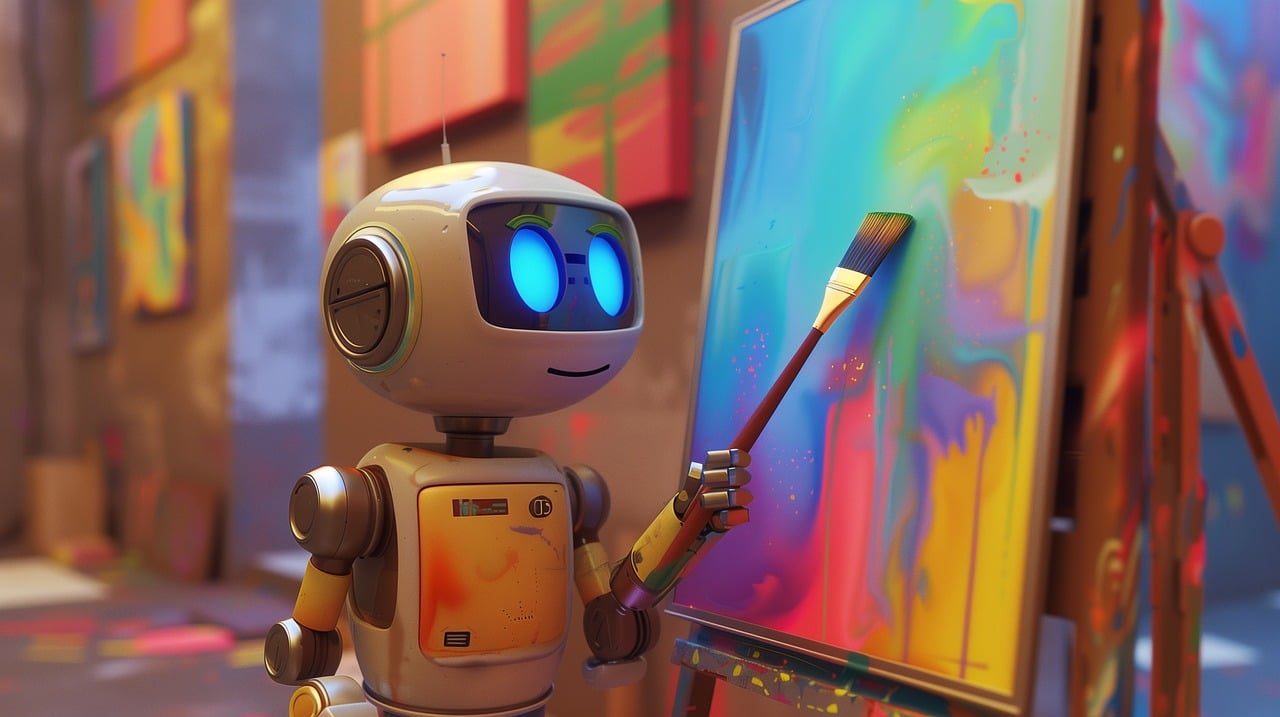
Generative AI models like GPT-4, DALL·E, and Sora can create text, images, music, and even videos. These models are transforming content creation, customer support, design, and education. A simple prompt can now generate realistic visuals, code, or stories within seconds.
4. Ethics and Challenges
With great power comes great responsibility. The widespread use of AI raises critical questions:
-
Bias: If the data is biased, the outcomes will be too.
-
Privacy: AI systems often require vast amounts of personal data.
-
Transparency: Black-box models can be hard to interpret.
-
Job Displacement: Automation may replace repetitive roles.
5. The Future of AI: Human + Machine
Rather than fearing AI, the focus should be on human-AI collaboration. Augmented intelligence—where machines assist humans rather than replace them—will define the next decade. Think of doctors using AI for diagnostics or writers using tools like ChatGPT to improve creativity.
Conclusion
AI isn’t just a trend—it’s a paradigm shift. As we move into an increasingly AI-driven world, our challenge is not just building smarter systems, but building ethical, inclusive, and transparent systems. The future of AI lies not in replacing humans, but in empowering them.


